Choosing between structured packing, random packing and trays is one of the most important decisions in distillation column design. The selection directly influences separation efficiency, pressure drop, processing capacity, equipment investment and long-term operating performance.
However, the most efficient packing is not necessarily the best solution for every chemical process. A vacuum distillation column, a high-liquid-load separation tower and an existing column undergoing capacity expansion may require entirely different internals.
This guide compares the three major types of vapor-liquid contacting equipment and explains how engineers can select suitable distillation column internals according to actual industrial operating conditions.
Which Type of Column Internals Should You Choose?
Choose Structured Packing When:Low pressure drop, high separation efficiency and effective use of available column height are primary engineering objectives, particularly in suitable vacuum distillation applications.
Consider Random Packing When:Installation flexibility, equipment economics, material compatibility and simpler packed-bed construction are important considerations.
Evaluate Trays When:The separation involves substantial liquid loads, multiple side draws, intermediate feed locations or operating conditions that favor stage-by-stage vapor-liquid contact.
These are preliminary selection principles. Final equipment selection requires project-specific hydraulic and mass transfer evaluation.
Understanding the Three Main Types of Distillation Column Internals
Structured packing, random packing and trays provide contact between vapor and liquid phases inside industrial separation columns. Although they serve a similar purpose, their physical structures and mass transfer mechanisms are different.
Structured Packing
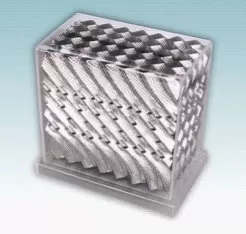
Structured packing consists of organized layers of corrugated sheets, mesh or other specially designed materials. Its geometry creates defined flow passages and promotes contact between rising vapor and descending liquid.
It is frequently evaluated for low-pressure separation, high-efficiency distillation and column revamp projects where available height or allowable pressure drop is limited.
Random Packing
Random packing consists of individual packing elements placed into a column to form a packed bed. Common industrial designs include Pall rings, Raschig rings and various saddle-shaped elements.
Different shapes, sizes and materials offer different combinations of available surface area, hydraulic capacity and installation flexibility. Random packing is used in distillation, absorption, stripping and other gas-liquid contact applications.
Distillation Trays
Distillation trays create discrete vapor-liquid contacting stages inside a tower. Common designs include sieve trays, valve trays and bubble cap trays.
Their suitability depends on vapor and liquid loading, operating flexibility, separation requirements and the mechanical configuration of the column. Trays are often considered for services requiring multiple feed points or intermediate product withdrawals.
The selection process should begin with the separation duty rather than a preference for a particular internal structure. Huda's customized column internals technology considers tower dimensions and mass transfer requirements as part of the engineering assessment.
Structured Packing vs. Random Packing vs. Trays: Performance Comparison
The following comparison summarizes general engineering tendencies. Actual performance depends on the selected equipment geometry, process fluid properties, operating pressure and hydraulic loading.
| Selection Factor | Structured Packing | Random Packing | Trays |
|---|
| Pressure Drop | Generally low | Low to moderate, depending on design | Often higher per separation stage |
| Separation Efficiency | Potentially high efficiency per unit height | Depends on element geometry and wetting | Depends on individual tray efficiency |
| Liquid Hold-Up | Often relatively low | Varies with packing type and loading | Often greater due to liquid retained on trays |
| Vacuum Distillation | Frequently preferred for evaluation | Suitable for selected duties | Pressure drop requires careful assessment |
| High Liquid Loads | Requires hydraulic evaluation | Depends on packing design | Often a suitable option |
| Fouling Resistance | Sensitive to certain deposits and blocked passages | Depends on element size and geometry | Selected tray designs may suit fouling service |
| Liquid Distribution | Highly important | Requires suitable distribution | Managed through tray hydraulic design |
| Column Retrofit | Strong potential for suitable applications | Flexible replacement options | Suitable for many existing tray towers |
Note: This table describes general performance characteristics rather than guaranteed rankings for specific equipment models.
Industrial selection should consider both separation performance and hydraulic behavior. The American Institute of Chemical Engineers' technical material on distillation trays and packings provides further background on these major types of fractionation equipment.
PERFORMANCE EVALUATION
Pressure Drop, HETP and Hydraulic Capacity: Three Essential Selection Criteria
Engineers should not compare column internals based solely on equipment price or nominal surface area. Three performance indicators are particularly important when evaluating alternative separation equipment.
01Pressure Drop
Pressure drop represents the pressure loss associated with vapor flow through the contacting equipment and other column internals. Excessive pressure loss can limit column capacity and affect the feasibility of vacuum separation.
For heat-sensitive chemicals or low-pressure distillation systems, reducing overall column pressure drop may provide substantial engineering value.
02Height Equivalent to a Theoretical Plate (HETP)
HETP is commonly used to express the separation efficiency of packing. It represents the equivalent packed height required to achieve one theoretical equilibrium stage.
HETP = Effective Packed Height / Equivalent Theoretical Stages
A lower HETP indicates greater separation efficiency per unit of packed height under the evaluated conditions. For trays, engineers generally use stage efficiency rather than HETP.
03Hydraulic Capacity and Operating Range
Hydraulic capacity describes the ability of column internals to accommodate vapor and liquid traffic within an acceptable operating range. A suitable design must consider normal production, reduced throughput and anticipated changes in process loading.
Flooding tendency, entrainment, liquid distribution and operating flexibility should be evaluated together instead of selecting equipment according to a single maximum capacity figure.
Engineering principle: Compare packing and trays on an equivalent separation-duty basis. A lower pressure drop per metre does not automatically establish a lower total column pressure drop if a greater packed height is required.
Why Structured Packing Geometry Matters: Zupak, Dapak and Chaopak
Structured packing is not a single standardized equipment design. Changes in corrugation geometry, channel arrangement and nominal specific surface area can influence vapor-liquid interaction, hydraulic resistance and separation performance.
Huda's structured packing technology portfolio includes several corrugated packing designs developed for industrial mass transfer applications.
Zupak
Sheets Combined Corrugated Packing
Uses a distinctive sheet and channel arrangement intended to balance available mass transfer surface, flow capacity and hydraulic resistance.
Dapak
Peak Valley Corrugated Packing
Features a modified peak-and-valley corrugation geometry intended to improve flow characteristics while maintaining the structural integrity of packing elements.
Chaopak
Bidirectional Curvelet Packing
Incorporates curved flow passages and staggered structural arrangements, with engineering objectives related to hydraulic capacity and reduced pressure loss.
Does Higher Specific Surface Area Always Mean Better Separation?
Not necessarily. A greater nominal surface area can increase the available area for vapor-liquid interaction, but effective separation also depends on wetting behavior, fluid distribution, hydraulic resistance and operating conditions.
Huda's published Zupak specifications include several nominal specific surface area options and X-type and Y-type corrugation configurations.
| Zupak Model Series | Nominal Specific Area | Available Configurations |
|---|
| 100 Series | 100 m2/m3 | 100X / 100Y |
| 125 Series | 125 m2/m3 | 125X / 125Y |
| 150 Series | 150 m2/m3 | 150X / 150Y |
| 200 Series | 200 m2/m3 | 200X / 200Y |
| 250 Series | 250 m2/m3 | 250X / 250Y |
| 350 Series | 350 m2/m3 | 350X / 350Y |
Model information is based on Huda's published structured packing specifications. Final packing selection and performance requirements are subject to technical evaluation.
The appropriate structured packing system should balance separation efficiency, available column height, pressure drop, liquid loading and expected operating conditions rather than simply maximizing nominal surface area.
Why Liquid Distribution Can Be More Important Than Packing Selection Alone
Even high-performance packing may deliver disappointing results if liquid is distributed unevenly across the column cross-section.
Liquid maldistribution can leave some regions of the packing insufficiently wetted while other regions receive excessive liquid loading. This reduces the effective utilization of the available mass transfer surface and can contribute to inconsistent separation performance.
| Poor Liquid Distribution | Well-Matched Liquid Distribution |
|---|
| Uneven utilization of packing surface. | More uniform packing wetting. |
| Localized hydraulic loading. | Better utilization of available surface. |
| Potential loss of separation efficiency. | More predictable hydraulic behavior. |
| Inconsistent product quality. | Support for consistent separation. |
Essential Components of a Packed Column
Liquid DistributorDistributes liquid over the packed bed.
↓
Upper Packed BedProvides vapor-liquid contacting area.
↓
Liquid Collector and RedistributorCollects and redistributes liquid between packed sections.
↓
Lower Packed BedProvides additional separation capacity.
Conceptual illustration of liquid flow through a multi-bed packed column. Actual internal arrangements vary by application.
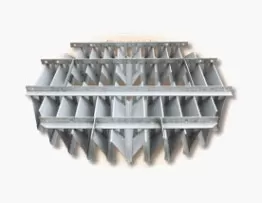
Huda Column Internal Component
Huda's industrial column internals solutions include trough-type, disc-type and pipe-type liquid distributors, liquid collectors, redistributors and demisters.
These components should be evaluated as part of a coordinated separation system. Replacing packing without reviewing the condition and suitability of associated distributors may leave the original performance limitations unresolved.
Choosing Column Internals for Different Industrial Operating Conditions
A practical equipment selection begins with identifying the most important constraint of the separation duty. Different operating environments require different combinations of efficiency, capacity and equipment reliability.
| Industrial Condition | Option to Evaluate | Primary Engineering Concern |
|---|
| Vacuum Distillation | Structured packing | Low overall pressure drop and efficient separation. |
| Heat-Sensitive Chemicals | Low-hold-up packing systems | Temperature exposure and residence-time considerations. |
| High Liquid Throughput | Suitable trays or high-capacity packing | Hydraulic capacity and liquid handling. |
| Fouling or Contaminated Service | Fouling-resistant trays or open packing geometries | Deposit accumulation and maintenance accessibility. |
| Small-Diameter Columns | Random or structured packing | Mechanical fit and effective distribution. |
| Multiple Feed and Side-Draw Locations | Trays or engineered multi-bed arrangements | Internal flow management and stream collection. |
| Existing Tower Capacity Expansion | High-capacity internals or packing conversion | Existing shell dimensions and system bottlenecks. |
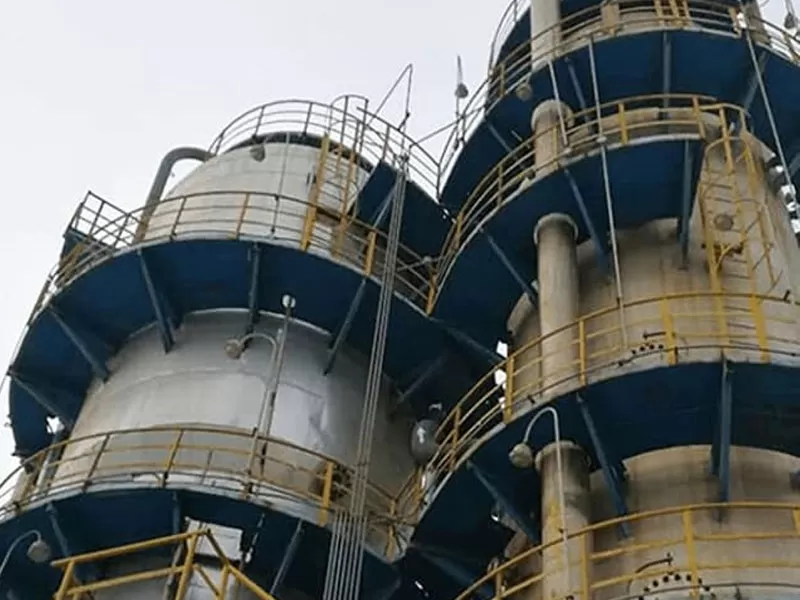
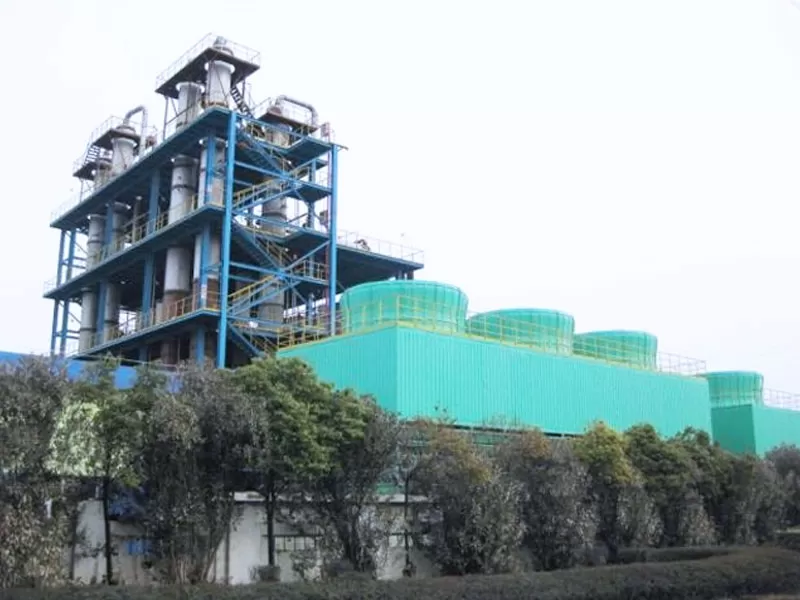
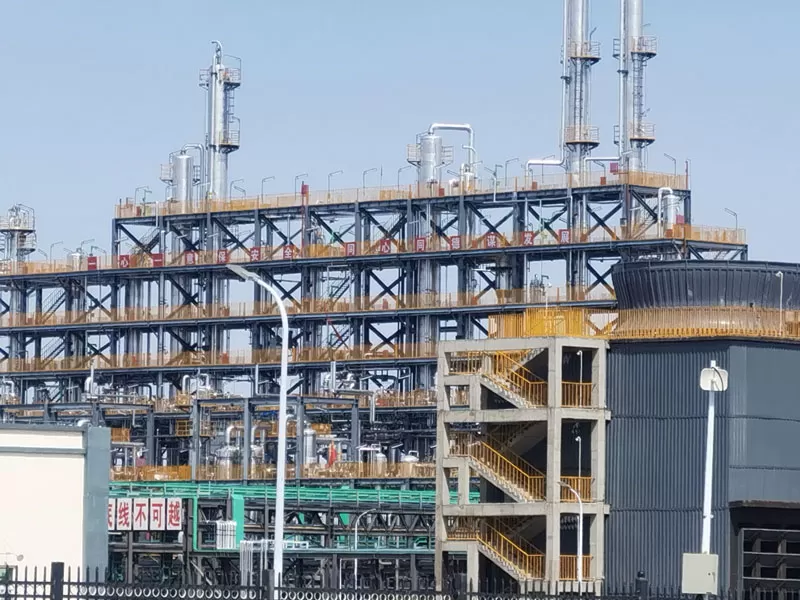
Huda's published structured packing reference list includes atmospheric tower packing, vacuum tower packing and chemical separation applications. These different duties illustrate why internal equipment must be matched to the individual process rather than selected from a universal configuration.
Can Structured Packing Increase the Capacity of an Existing Tray Column?
Replacing conventional trays with structured packing may improve separation capacity or reduce pressure drop in suitable applications. However, a tray-to-packing conversion should be evaluated as a complete column revamp rather than a simple equipment replacement.
The existing column shell, available internal height, mechanical supports, feed locations and associated equipment can all influence whether a conversion is technically and economically feasible.
Before a Column Revamp: Five Questions to Answer
01. Where Is the Actual Production Bottleneck?Determine whether the current limitation is associated with column hydraulics, separation performance or another part of the process system.
02. Can the Existing Column Shell Accommodate New Internals?Review the available internal height, diameter, access openings, mechanical supports and existing equipment interfaces.
03. Are the Feed and Liquid Distribution Systems Suitable?A packed-column conversion may require a different liquid distribution and collection arrangement from the original tray system.
04. Can the Supporting Equipment Handle the Proposed Throughput?Associated heating, cooling, pumping and utility systems should be evaluated alongside the proposed column capacity.
05. Does the Expected Benefit Justify the Modification Cost?Compare the projected production improvement, utility savings and maintenance implications with engineering expenditure, installation costs and shutdown-related losses.
A successful revamp requires coordinated process, hydraulic and mechanical engineering. The expected improvement should be established through a project-specific evaluation rather than assumed from general packing performance claims.
Common Distillation Column Performance Problems and Possible Causes
Poor separation performance does not automatically mean that the installed packing or trays are unsuitable. The underlying issue may involve liquid distribution, equipment condition, process loading or supporting infrastructure.
| Observed Problem | Possible Contributing Factors | Engineering Review |
|---|
| High Column Pressure Drop | Excessive hydraulic loading, deposits or unsuitable internal geometry. | Hydraulic performance and equipment condition assessment. |
| Poor Product Purity | Insufficient separation, maldistribution or changing process conditions. | Mass transfer and process performance review. |
| Unstable Column Operation | Variable loading, internal limitations or system control issues. | Operating range and overall system assessment. |
| Reduced Production Capacity | Hydraulic bottlenecks, fouling or supporting equipment limitations. | Integrated process debottlenecking study. |
| Liquid Carryover | Entrainment or unsuitable vapor-liquid separation equipment. | Review of hydraulic conditions and demister suitability. |
These observations are preliminary diagnostic indicators, not definitive causes. Industrial column inspections and corrective actions should be planned by qualified engineering personnel according to applicable plant safety procedures.
What Information Should You Provide to a Column Internals Manufacturer?
A reliable quotation for structured packing or other tower internals requires more than the column diameter. Process information is necessary to determine the appropriate mass transfer equipment, mechanical configuration and material requirements.
Separation Duty: Distillation, absorption, stripping or another industrial mass transfer application.
Process Fluid Information: Fluid composition, physical properties, material compatibility and contamination concerns.
Column Dimensions: Internal diameter, available height, access openings and existing mechanical arrangement.
Hydraulic Design Basis: Evaluated vapor and liquid loading ranges and allowable pressure drop.
Separation Requirements: Intended product specifications and required separation performance.
Material Requirements: Approved construction materials, corrosion considerations and applicable equipment standards.
Project Type: New column construction, equipment replacement, capacity expansion or process modification.
Supply Scope: Packing elements, distributors, collectors, demisters, engineering services or installation guidance.
Huda provides customized design, fabrication and installation guidance for tower internals according to different column dimensions and mass transfer requirements. Its published capabilities also include hydraulic testing and precision component fabrication.
Frequently Asked Questions About Distillation Column Internals
Is structured packing more efficient than random packing?
Structured packing often offers high separation efficiency per unit of packed height under suitable operating conditions. However, the actual comparison depends on packing geometry, fluid properties, hydraulic loading and liquid distribution. Random packing may be more appropriate for certain separation duties.
Why is structured packing frequently used in vacuum distillation?
Structured packing is frequently considered because of its relatively low pressure drop and potential for efficient separation. These characteristics can be particularly valuable where the available pressure difference across the column is limited.
What is the difference between X-type and Y-type structured packing?
X-type and Y-type packing generally differ in corrugation inclination. In Huda's published Zupak specifications, the nominal corrugation angles are 30 degrees for X-type and 45 degrees for Y-type. These geometric differences can influence hydraulic capacity and separation characteristics.
Are trays better than packing for fouling service?
Certain tray designs may be preferable where deposits, solids or maintenance accessibility are major concerns. Some open packing geometries can also be suitable. The appropriate choice depends on the nature of the fouling mechanism and the required separation performance.
Can I replace random packing with structured packing in an existing column?
A conversion may be feasible, but the existing column diameter, available height, mechanical supports, liquid distribution system and process loading must be evaluated. Replacing packing alone does not guarantee increased capacity or improved separation.
What is the purpose of a liquid redistributor in a packed column?
A liquid redistributor collects liquid from an upper section and distributes it over a subsequent packed bed. Its purpose is to support more uniform liquid flow and limit the accumulation of maldistribution effects across multiple packing sections.
Does higher packing surface area always reduce HETP?
No. Greater nominal surface area may support improved mass transfer, but effective wetting, fluid distribution, hydraulic behavior and the physical properties of the process fluids also influence HETP. Packing performance must be evaluated under comparable conditions.
Can distillation column internals be customized for an existing tower?
Yes. Customized internals can be evaluated according to existing tower dimensions, separation requirements and mechanical constraints. Huda offers structural design, component fabrication and installation guidance for industrial column internals, with the final configuration determined through technical assessment.
Conclusion: Select the Complete Separation System, Not Just the Packing
Structured packing, random packing and trays each offer advantages for different industrial separation requirements. Structured packing is frequently evaluated for low-pressure and high-efficiency applications, while random packing and trays remain valuable options across a wide range of operating conditions.
The best solution is the one that achieves the required separation while maintaining acceptable hydraulic performance, mechanical compatibility, operating flexibility and lifecycle economics.
For both new distillation plants and existing tower revamps, packing selection should be coordinated with liquid distributors, collectors, support structures and other essential column internals. A well-matched internal system is fundamental to reliable industrial separation performance.
Need Help Selecting Column Packing and Internals?
Whether you are designing a new distillation column, replacing existing packing or evaluating a tower capacity expansion, Huda Chemical can help assess your industrial separation requirements.
Share your tower dimensions, process duty and separation objectives with our engineering team to discuss a suitable column internals solution.