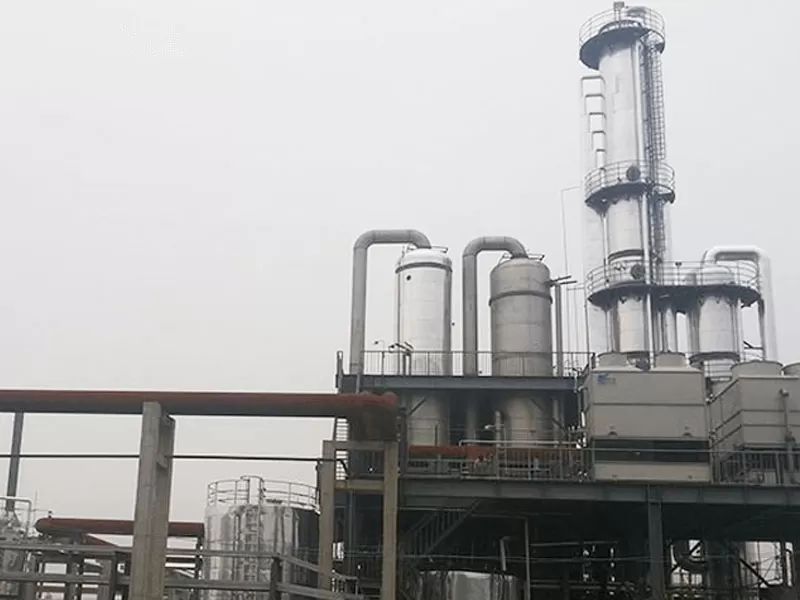
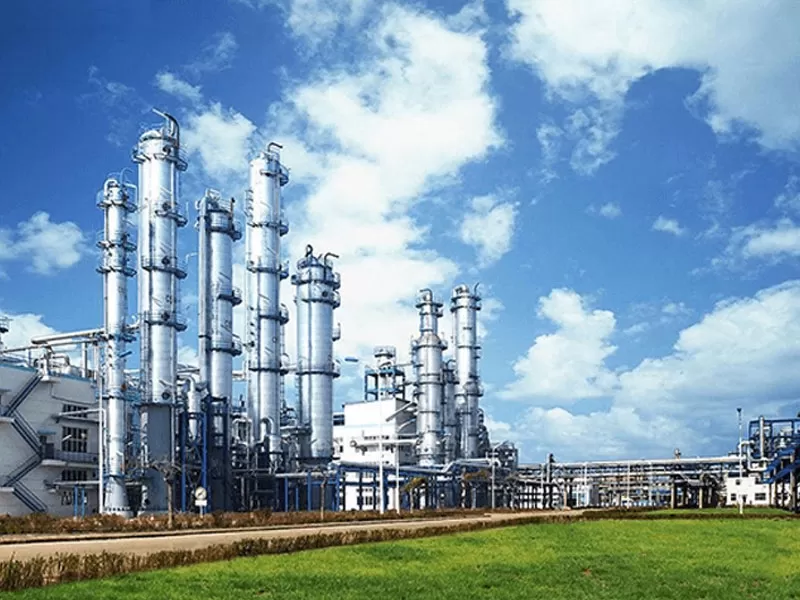
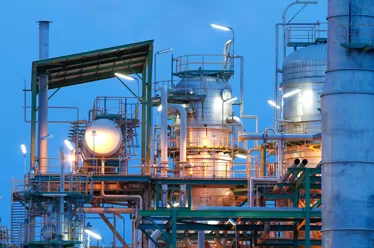
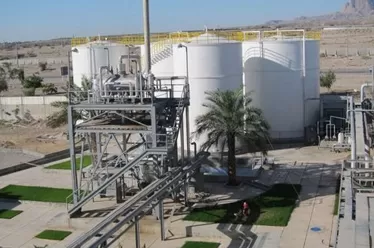
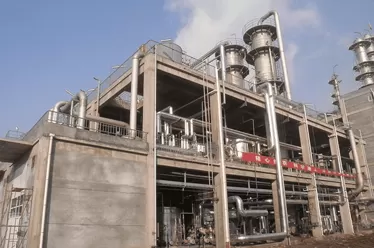
Methyl methacrylate (MMA) is an important industrial monomer used in the production of polymethyl methacrylate (PMMA), acrylic coatings, adhesives and specialized polymer materials. However, producing crude MMA is only one part of developing a commercially competitive manufacturing facility.The ability to control impurities, maintain product consistency and manage unwanted polymerization is equally important. These requirements make MMA purification technology a critical part of industrial monomer production and chemical plant engineering.
For manufacturers planning a new MMA purification plant or upgrading an existing separation system, equipment selection should be based on the production route, impurity profile, downstream product specifications and overall process safety requirements.
What Is MMA Purification Technology?
MMA purification technology refers to the industrial separation and refining systems used to obtain methyl methacrylate monomer that meets defined commercial quality requirements. It addresses residual feedstocks, reaction by-products, moisture, other impurities and product stability considerations.
Unlike ordinary solvent separation, MMA purification must also account for the chemical reactivity of the monomer and the potential consequences of unintended polymerization. The final engineering configuration therefore requires coordinated separation technology, quality control and professional process safety evaluation.
Why the MMA Production Route Determines Purification Requirements
Industrial MMA can be manufactured through several technology routes. Each route involves different upstream feedstocks, intermediate products and reaction characteristics, which influence the composition of the crude product and its subsequent refining requirements.
Before evaluating a purification system, manufacturers must understand the origin and composition of the process stream. Equipment developed for one MMA production technology cannot automatically be transferred to another without appropriate engineering assessment.
| Production Route | Principal Feedstock Basis | Purification Considerations |
|---|
| C2 Route | Ethylene-based feedstocks, with other raw materials depending on the licensed process. | Route-specific residual materials, intermediates and product quality requirements. |
| C3 / ACH Route | Acetone cyanohydrin-based production. | Route-specific impurities, material compatibility and environmental responsibilities. |
| C4 Route | Isobutene or tert-butyl alcohol (TBA). | Quality management across oxidation, intermediate separation and esterification units. |
| Coal Chemical Route | Feedstock supply associated with coal chemical industrial chains. | Purification requirements determined by the specific technology package and stream composition. |
Huda's Published C4 MMA Technology
Huda's published MMA production technology and plant solution describes a C4-based process involving oxidation, distillation and esterification units.
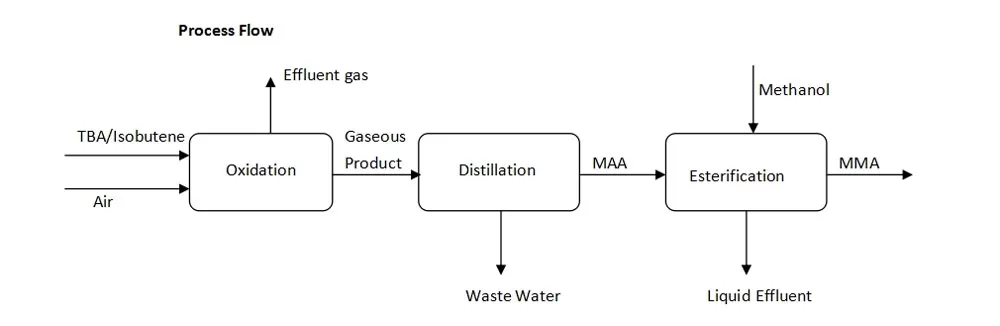
Published Overview of Huda's C4-Based MMA Production Technology
The published diagram illustrates the major production units and intermediate material relationships. It is a simplified process overview rather than a detailed final-product purification design.
The specific refining equipment, product acceptance criteria and associated engineering requirements must be established within the individual project design.
Which Impurities Matter Most in Industrial MMA?
MMA quality cannot be evaluated by monomer concentration alone. Even when the overall product assay is high, specific impurities may affect downstream processing, polymer properties or commercial acceptance.
The impurity profile varies with production technology, feedstock characteristics and the condition of the separation system. Manufacturers should establish which quality indicators are commercially relevant before specifying the purification equipment.
| Quality Indicator | Why It Matters | Commercial Implications |
|---|
| MMA Assay | Indicates the proportion of the intended monomer. | Primary product acceptance requirement. |
| Moisture Content | May affect downstream processing and customer specifications. | Relevant to product qualification and consistency. |
| Residual Acidity | Reflects the presence of acidic components where applicable. | May influence suitability for downstream formulations. |
| Light and Heavy Impurities | Route-dependent residual components and by-products. | Can affect monomer quality and downstream production. |
| Color | An important appearance-related quality indicator. | Particularly relevant to transparent acrylic products. |
| Stabilizer Specification | Related to monomer stability and safe product handling. | Must be compatible with approved product and safety requirements. |
| Nonvolatile Residue | Indicates the presence of certain nonvolatile materials. | May be relevant to specialized customer acceptance criteria. |
These indicators represent general industrial quality considerations. Specific limits, analytical methods and acceptance criteria depend on the product grade and contractual requirements.
DISTILLATION ENGINEERING
Four Major Challenges in MMA Distillation and Purification
The purification of a reactive monomer requires a broader engineering assessment than conventional separation duty. Equipment performance, process safety, material compatibility and product quality must be evaluated together.
01 / Thermal Sensitivity
MMA is a reactive monomer, and its behavior during industrial processing requires appropriate evaluation of thermal exposure and product stability.
The engineering assessment must consider separation objectives together with the chemical safety characteristics of the process materials.
02 / Unwanted Polymerization
Unintended polymerization can create serious safety hazards and affect equipment availability, product consistency and production continuity.
Monomer stability and the approved stabilization strategy must be addressed by qualified chemical process engineers as part of the complete facility design.
03 / Complex Impurity Profiles
Different MMA manufacturing routes can generate different intermediate materials and residual components. Some impurities may be commercially relevant even at relatively low concentrations.
An appropriate purification design must be based on representative stream composition data and defined product specifications.
04 / Product Recovery and Lifecycle Economics
A purification system should be evaluated not only for finished product quality but also for commercial product recovery, utility expenditure and maintenance requirements.
Additional separation equipment can increase initial investment, while insufficient refining capability may limit product market opportunities.
The most suitable MMA purification technology balances separation performance, product stability, engineering safety and long-term production economics.
Polymerization Risk: Why MMA Is Different from Conventional Solvents
Methyl methacrylate is intentionally polymerized to manufacture PMMA and other acrylic polymer products. However, uncontrolled polymerization during monomer manufacturing, refining or storage is an important chemical safety concern.
The Methacrylate Producers Association's safe handling guidance emphasizes the importance of understanding supplier safety data sheets and applying appropriate industrial product stewardship practices when handling methacrylate monomers.
Key Areas of Professional Engineering Assessment
Monomer Stability: Evaluation of chemical stability throughout the approved production and product handling system.
Equipment Integrity: Assessment of material compatibility, inspection requirements and long-term equipment reliability.
Process Monitoring: Definition of appropriate monitoring, protective systems and professional operating procedures.
Product Handling: Coordination of purification, product storage, transport and downstream customer acceptance requirements.
A purification system should not be selected solely on the basis of nominal separation efficiency. The engineering design must account for the specific hazards associated with reactive monomers.
Safety-related operating conditions, stabilization requirements and protective systems must be determined by qualified professionals using the applicable safety data sheets, licensed technology documentation and project-specific hazard assessments.
How to Select Distillation Equipment for an MMA Purification Plant
The appropriate equipment configuration depends on the required separation duty, product characteristics, allowable pressure drop, plant capacity and overall technology design.
Distillation columns, packing, liquid distributors, heat transfer equipment and process monitoring systems should be evaluated as interconnected components rather than independent purchases.
| Equipment Category | Primary Function | Selection Consideration |
|---|
| Distillation Columns | Provide the required industrial separation duty. | Separation requirements, material compatibility and mechanical design. |
| Structured Packing | Provides vapor-liquid contacting surface. | Pressure drop, mass transfer performance and suitability for the process. |
| Liquid Distributors | Support appropriate liquid distribution across packing. | Hydraulic compatibility and distribution performance. |
| Heat Transfer Equipment | Supports the thermal requirements of the approved process. | Thermal duty, materials and equipment reliability. |
| Process Monitoring Systems | Support process observation and quality management. | Measurement reliability and approved process safety requirements. |
| Product Quality Systems | Evaluate finished monomer acceptance. | Analytical methods, customer specifications and documentation. |
When Should Structured Packing Be Considered?
Structured packing can be considered in suitable separation applications where low pressure drop and effective mass transfer are important engineering objectives.
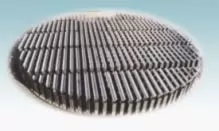
Huda Zupak Structured Packing for Industrial Separation Applications
Huda's structured packing technology includes multiple corrugated designs intended for industrial mass transfer applications. The portfolio provides different structural options for engineering evaluation.
However, the suitability of any specific packing model for MMA service must be confirmed through the project design. General packing performance advantages should not be treated as proof of compatibility with a particular reactive monomer separation duty.
The selection should also include associated distillation column internals, such as liquid distributors, collectors and other components required by the proposed column configuration.
DOWNSTREAM QUALITY REQUIREMENTS
How MMA Purity Influences Downstream PMMA Production
The commercial value of MMA depends partly on whether the monomer satisfies the quality requirements of its intended downstream application. Different PMMA and acrylic product markets can place different demands on monomer consistency, appearance and trace impurity management.
General Acrylic Sheet Production
Manufacturers of acrylic sheets require reliable monomer quality and consistent downstream processing performance. Product appearance, color and overall material consistency are important commercial considerations.
Optical and High-Transparency PMMA Applications
Specialized transparent acrylic products may require additional control over impurities, color and contamination. Monomer qualification represents one part of a broader quality management system covering polymer production and finished material performance.
Coatings, Adhesives and Acrylic Resins
These industries may evaluate MMA according to formulation compatibility, product stability, residual components and customer-specific processing requirements.
Specialized Polymer Materials
Higher-value polymer markets can require more extensive analytical documentation, customer qualification and consistency verification. The relevant specifications should be established before defining the monomer production and purification scope.
Why Monomer Assay Alone Is Not Enough
Two MMA products with a similar overall monomer assay may still differ in color, moisture, acidity, trace impurities or stabilization characteristics.
A meaningful product specification must therefore identify the quality indicators that matter to the intended downstream customer rather than relying on a single purity percentage. Optical-grade PMMA capability, in particular, cannot be established from MMA assay alone.
MMA Quality Problems: What Should the Engineering Team Investigate?
When an MMA production facility experiences inconsistent product quality, the cause may involve upstream production, purification performance, equipment condition or product handling. A systematic investigation is more useful than assuming that the distillation column is responsible for every quality problem.
| Observed Issue | Potential Contributing Factors | Evaluation Focus |
|---|
| Low Product Assay | Changing feed composition or insufficient separation performance. | Analytical data and separation system review. |
| Variable Product Color | Impurity variation, contamination or product degradation. | Quality history and approved handling system assessment. |
| Excessive Moisture | Feedstock variation or limitations within the separation system. | Material quality and refining performance evaluation. |
| Reduced Product Recovery | Changes in process performance or material losses. | Integrated production and material balance assessment. |
| Increasing Column Pressure Drop | Potential equipment condition changes, deposits or hydraulic limitations. | Professional equipment integrity and process safety review. |
| Inconsistent Customer Acceptance | Mismatch between plant quality targets and customer-specific requirements. | Commercial specifications and analytical methods. |
These are potential contributing factors rather than definitive diagnoses. Abnormal conditions involving reactive monomers require assessment by qualified personnel under approved plant safety procedures.
Industrial MMA Project Experience: From Technology Development to Commercial Production
Industrial project references help investors evaluate whether a chemical technology provider has experience beyond laboratory research and preliminary engineering. Huda's published materials describe MMA projects associated with different production technology backgrounds.
C4 TECHNOLOGY REFERENCE
20,000 TPA
Industrial MMA Production Plant
According to Huda's MMA technology page, a 20,000-tonne-per-year facility was constructed in 2012 and entered production in 2013, producing material that met its applicable quality requirements.
The company also reports that the associated technology received industry technology accreditation in 2014.
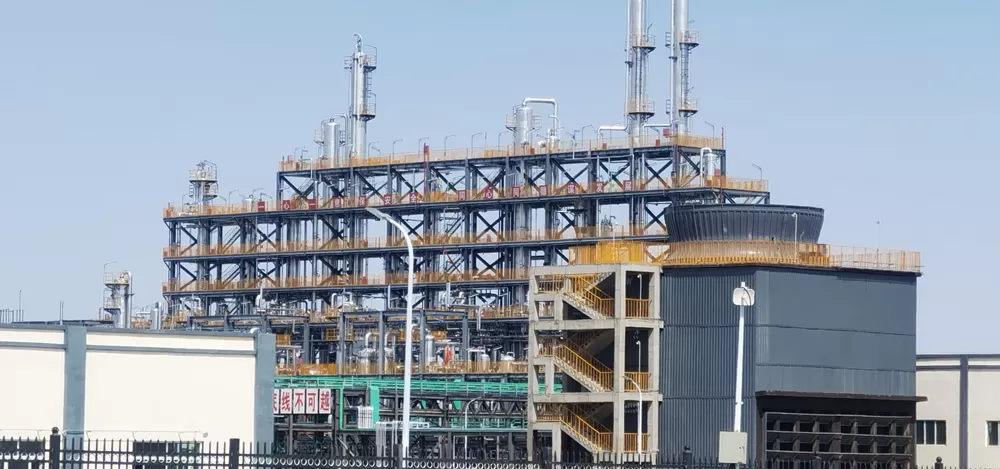
Xinjiang Industrial MMA Plant Project Published by Huda Chemical
COAL CHEMICAL ROUTE PROJECT
110,000 TPA
Published MMA Monomer Production Capacity
Xinjiang MMA Plant Successful Start-Up
In August 2022, Jiangsu Huda Chemical Technology Co., Ltd. announced the successful start-up of a 110,000 TPA MMA monomer project in Xinjiang, with finished products meeting the project's quality requirements.
The company identifies this facility as a coal chemical route MMA project. Its technology background is distinct from the C4 production route described in Huda's MMA technology introduction.
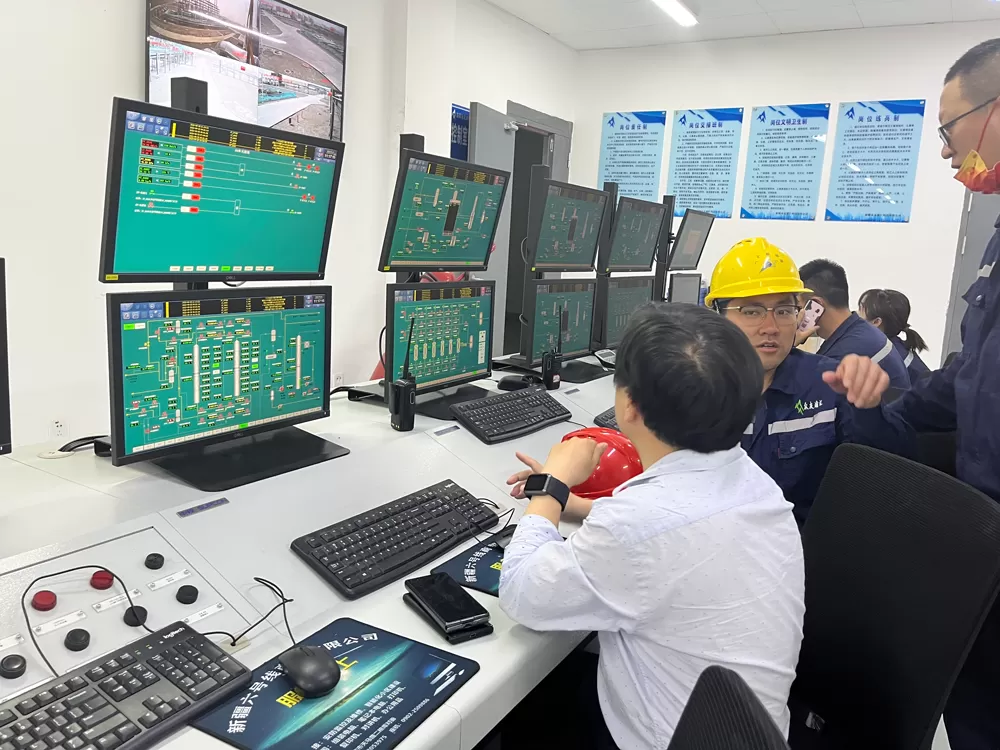
Project Control Room Image from Huda's Published Start-Up Report
The project demonstrates industrial-scale MMA technology implementation. However, detailed purification equipment configurations, product purity limits and utility consumption figures are not disclosed in the published project announcement.
Read the Xinjiang MMA Plant Start-Up Report >
When evaluating a technology provider, investors should request relevant project information and confirm the proposed technology route, engineering scope and product performance criteria for their own facility.
MMA Purification Plant Design: What Information Is Required?
A complete MMA purification plant cannot be specified using annual capacity and target purity alone. Engineering teams require sufficient technical information to evaluate the production route, separation duty, product requirements and overall project boundaries.
01. Upstream MMA Production TechnologyIdentify the licensed production route, relevant process documentation and existing industrial production arrangements.
02. Feed Stream CharacterizationProvide representative composition information, impurity profiles and the approved engineering data required for separation assessment.
03. Target Product SpecificationsDefine the intended MMA quality indicators, analytical methods and downstream customer acceptance criteria.
04. Production Capacity and Commercial ObjectivesEstablish the required annual saleable output, product markets and expected production continuity.
05. Existing Equipment and Plant InfrastructureFor retrofit projects, provide available equipment drawings, site information and existing production constraints.
06. Process Safety and Regulatory RequirementsIdentify applicable industrial safety obligations, environmental requirements and approved technology-related design responsibilities.
07. Engineering and Supply BoundariesClarify whether the project requires a technology package, equipment supply, plant revamp, complete engineering or integrated EPC delivery.
These project inputs provide a more reliable basis for equipment selection, engineering evaluation and preliminary commercial proposals.
Huda's chemical plant engineering and EPC services cover process packages, engineering design, procurement, construction management and technical support according to the agreed project scope.
How to Evaluate the Commercial Performance of an MMA Purification System
A purification plant should ultimately be evaluated according to its ability to produce commercially acceptable MMA reliably and economically. Maximum nominal purity is not the only measure of success.
| Performance Indicator | Commercial Evaluation |
|---|
| Saleable Product Output | Actual product volume meeting the agreed quality requirements. |
| Product Consistency | Ability to satisfy relevant quality indicators over the evaluated production period. |
| Utility Expenditure | Energy and utility expenses allocated to saleable monomer production. |
| Equipment Availability | Production continuity, maintenance requirements and planned downtime. |
| Customer Qualification | Acceptance by the intended PMMA, coatings or other acrylic material customers. |
| Safety and Compliance | Compliance with applicable process safety and environmental responsibilities. |
The Commercial Objective of MMA Purification
The objective is not simply to obtain the highest possible laboratory purity. It is to achieve the required customer specifications while maintaining an economically viable, professionally engineered and appropriately managed industrial production facility.
Frequently Asked Questions About MMA Purification Technology
What is the purpose of MMA purification?
MMA purification is intended to obtain methyl methacrylate monomer that satisfies defined product specifications. It addresses relevant impurities, moisture, residual materials and product quality requirements while accounting for the chemical stability and safety characteristics of the monomer.
Why is MMA distillation more challenging than ordinary solvent distillation?
MMA is a reactive monomer with a potential for unwanted polymerization. Its purification therefore requires additional consideration of chemical stability, equipment compatibility, professional process safety assessment and customer-specific quality requirements.
Does the MMA production route affect purification equipment selection?
Yes. Different production routes can generate different process intermediates, residual materials and impurity profiles. The appropriate purification configuration must be evaluated using the licensed technology information, representative stream data and required finished product specifications.
Can structured packing be used in MMA purification columns?
Structured packing may be considered where its mass transfer and hydraulic characteristics are suitable. However, selection for MMA service requires project-specific evaluation of chemical compatibility, process conditions, equipment integrity and the approved safety design.
What quality indicators should be evaluated in purified MMA?
Relevant indicators may include monomer assay, moisture, acidity, color, residual impurities, nonvolatile residue and stabilizer specifications. The exact requirements depend on the intended downstream market and agreed product acceptance criteria.
Does high-purity MMA guarantee optical-grade PMMA?
No. Monomer quality is important, but optical-grade PMMA also depends on polymerization technology, downstream processing, contamination management and finished product testing. High MMA assay alone cannot establish the optical performance of the resulting polymer.
Can an existing MMA purification plant be upgraded?
An upgrade may be feasible depending on existing equipment condition, separation requirements, plant infrastructure and approved process safety considerations. A professional engineering assessment is necessary before determining whether equipment replacement or broader system modification is appropriate.
What information is needed for an MMA purification plant quotation?
Important inputs include the upstream production technology, feed composition, target annual output, required product specifications, site conditions, available infrastructure, applicable safety requirements and intended engineering delivery scope.
Conclusion: MMA Purification Requires an Integrated Engineering Approach
Industrial MMA purification is more than a conventional distillation task. It requires a coordinated understanding of upstream production technology, impurity profiles, monomer stability, downstream polymer requirements and separation equipment performance.
For manufacturers planning a new facility or evaluating an existing plant upgrade, equipment selection should be supported by a clear product specification and a comprehensive professional engineering assessment.
Combining appropriate purification technology with reliable column internals, quality management and integrated plant engineering provides a stronger foundation for commercially competitive MMA production.
Planning an MMA Production or Purification Project?
Huda Chemical provides industrial chemical process technology, distillation engineering, customized column internals and chemical plant project delivery services.
Share your MMA production route, target capacity, finished product requirements and project objectives with our engineering team to discuss an appropriate technology and equipment proposal.