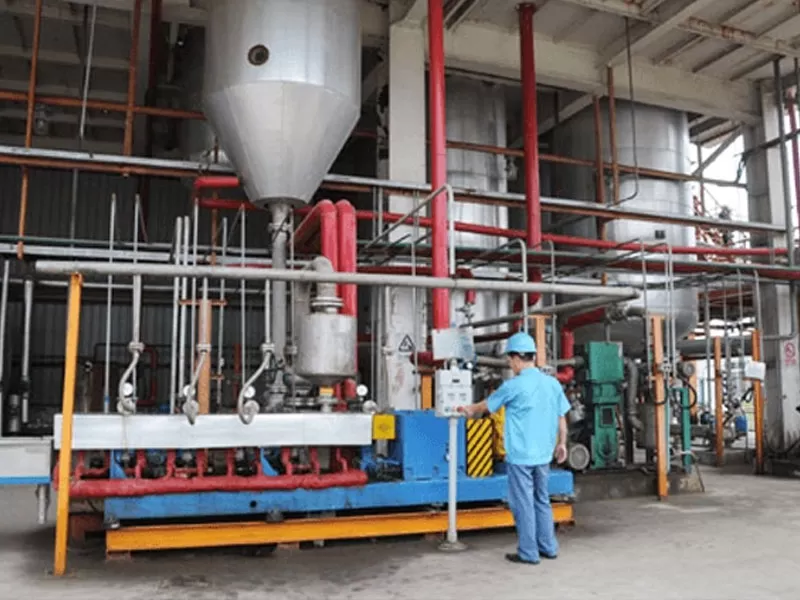
Introduction of Dimethyl Sulfoxide (DMSO)
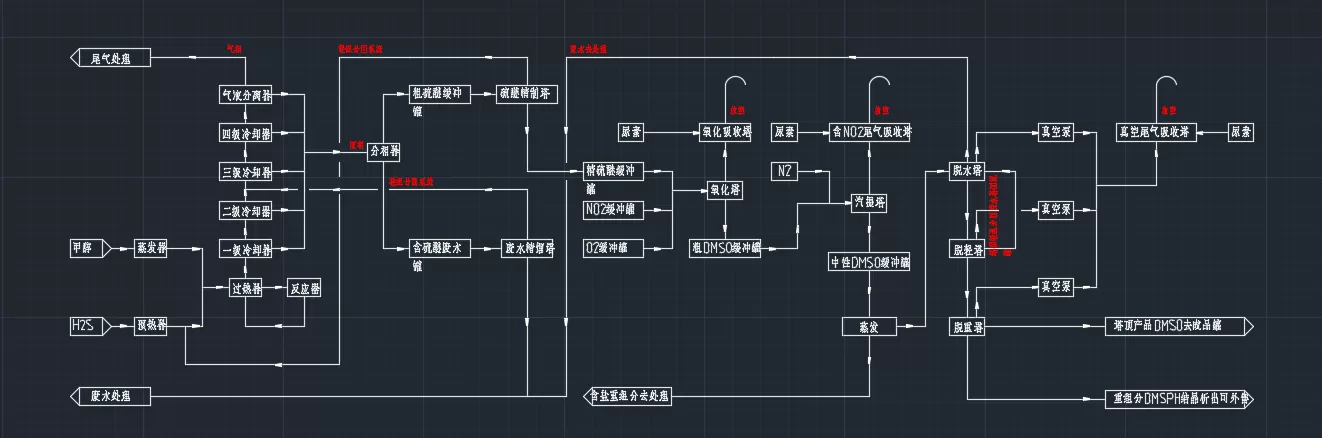
Dimethyl sulfoxide (DMSO) is produced through a two-step process using hydrogen sulfide (H₂S), methanol (CH₃OH), and oxygen (O₂) as raw materials.
In the first step, hydrogen sulfide and methanol react to form dimethyl sulfide (DMS) through a vapor-phase catalytic reaction. The resulting DMS is then purified and subsequently oxidized in the second step using oxygen or oxygen-containing gases to yield dimethyl sulfoxide. The oxidation is typically carried out in the presence of a catalyst, such as nitrogen dioxide, under controlled conditions to ensure high selectivity and yield.
This process enables efficient conversion of raw materials into high-purity DMSO, which is widely used as an industrial solvent and in pharmaceutical applications.
Here are the main advantages and disadvantages of the DMSO production process using hydrogen sulfide, methanol, and oxygen as raw materials.

Advantages of Dimethyl Sulfoxide (DMSO) Production Process
Established technology – The two-step process (DMS synthesis followed by oxidation) is well understood and widely used in industrial production, offering reliable operation.
High yield and selectivity – With appropriate catalysts (e.g., nitrogen dioxide for the oxidation step), the conversion of dimethyl sulfide to DMSO can achieve high selectivity, minimizing by‑products.
Cost‑effective raw materials – Methanol and hydrogen sulfide are relatively inexpensive and available in large quantities, especially when hydrogen sulfide is sourced from refinery or natural gas streams.
Scalability – The process is suitable for large‑scale continuous production, allowing efficient capacity expansion.
Disadvantages of Dimethyl Sulfoxide (DMSO) Production Process
Toxicity and safety risks – Hydrogen sulfide is highly toxic and corrosive, requiring strict safety measures, leak detection systems, and specialized equipment. Methanol is flammable and poses health hazards.
Corrosion concerns – The presence of sulfur compounds and intermediates can cause corrosion in reactors and pipelines, necessitating the use of corrosion‑resistant materials (e.g., stainless steel or specialized alloys).
Environmental impact – Unreacted hydrogen sulfide, volatile organic compounds, and sulfur‑containing by‑products must be carefully managed. Off‑gas treatment (e.g., incineration or scrubbing) is required to meet emission standards.
Catalyst handling – In the oxidation step, catalysts such as nitrogen dioxide are corrosive and may require careful recovery or neutralization to avoid secondary pollution.
Process complexity – Although the basic chemistry is straightforward, the need for purification of dimethyl sulfide before oxidation, plus strict control of reaction conditions (temperature, oxygen concentration), adds to operational complexity.
Here is an overview of the applications and development prospects of Dimethyl Sulfoxide (DMSO).
Key Applications of DMSO
DMSO is a polar aprotic solvent known for its exceptional ability to dissolve both polar and non-polar compounds, as well as its unique capacity to penetrate biological membranes.
1. Pharmaceutical and Biotechnology
Drug Delivery: DMSO enhances the absorption of medications through the skin, making it valuable for topical and transdermal formulations.
Cryopreservation: It is widely used as a cryoprotectant to preserve cells, tissues, and stem cells by preventing ice crystal formation during freezing.
Therapeutic Agent: DMSO possesses anti-inflammatory, antioxidant, and mild analgesic properties. It is approved for treating interstitial cystitis and is used topically for pain relief and wound healing.
2. Electronics Industry
Due to its high purity and ability to reduce electrostatic charges, DMSO is essential in semiconductor manufacturing for precision cleaning, etching, and as a solvent in the production of flat screens and micro-electronic devices.
3. Chemical and Industrial Applications
Polymer Processing: Used in spinning solutions for carbon fibers and as a solvent for polyurethane, polyimide, and polysulfone resins.
Paints and Coatings: Acts as an effective, safer alternative to chlorinated solvents in paint strippers, degreasers, and varnishes.
Agrochemicals: Serves as a synthetic solvent for pesticides and herbicides, helping active substances penetrate plant membranes.
4. Other Uses
Extraction Solvent: Used in aromatics extraction and to purify aromatic oils by removing low-molecular sulfur compounds.
Laboratory Reagent: A common solvent in chemical synthesis and NMR spectroscopy.
Market Size and Growth Prospects
The global DMSO market is experiencing steady growth, driven by expanding applications across high-value industries.
Market Valuation: The market was valued at approximately $150 million to $420 million in 2024 and is projected to reach $225 million to $560 million by 2030-2031.
Growth Rate: Expected to grow at a CAGR of 4.0% to 6.7% during the forecast period.
Key Growth Drivers
Pharmaceutical R&D: Increasing investment in biologics, drug delivery systems, and cell-based therapies drives demand for high-purity DMSO.
Electronics Expansion: The rapid growth of the semiconductor and display industries, particularly in Asia-Pacific, fuels consumption of electronic-grade DMSO.
Green Chemistry Trends: DMSO is gaining preference as a safer, biodegradable alternative to traditional chlorinated solvents.
Emerging Applications: New opportunities are emerging in battery electrolytes, advanced composites, and continuous flow chemistry.
Regional Outlook
Asia-Pacific is the fastest-growing market, driven by pharmaceutical manufacturing in China and India, and electronics production in Japan, South Korea, and Taiwan .
North America and Europe remain key markets, with demand focused on high-purity grades for pharmaceutical and specialty chemical applications.
Market Challenges
Regulatory Scrutiny: DMSO's ability to enhance skin penetration raises safety concerns, leading to strict regulations and compliance costs.
Price Volatility: Raw material costs (sulfur-based feedstocks) are subject to fluctuations due to geopolitical factors.
Competition: Alternative solvents and production cost pressures may impact market share.
Future Outlook
The DMSO market is poised for continued growth, supported by:
Innovation in Life Sciences: Ongoing research into DMSO's therapeutic potential for neurodegenerative diseases and cancer could open new demand avenues.
Sustainable Production: Investment in eco-friendly manufacturing methods and bio-based DMSO is expected to enhance the product's environmental profile.
Supply Chain Diversification: Efforts to reduce reliance on single-source suppliers are improving market stability.
In summary, DMSO's unique solvency and membrane-penetrating properties, combined with its versatility across multiple industries, position it for steady long-term growth. The shift toward greener solvents and the expansion of high-tech manufacturing in Asia will be key trends shaping the market over the next decade.